
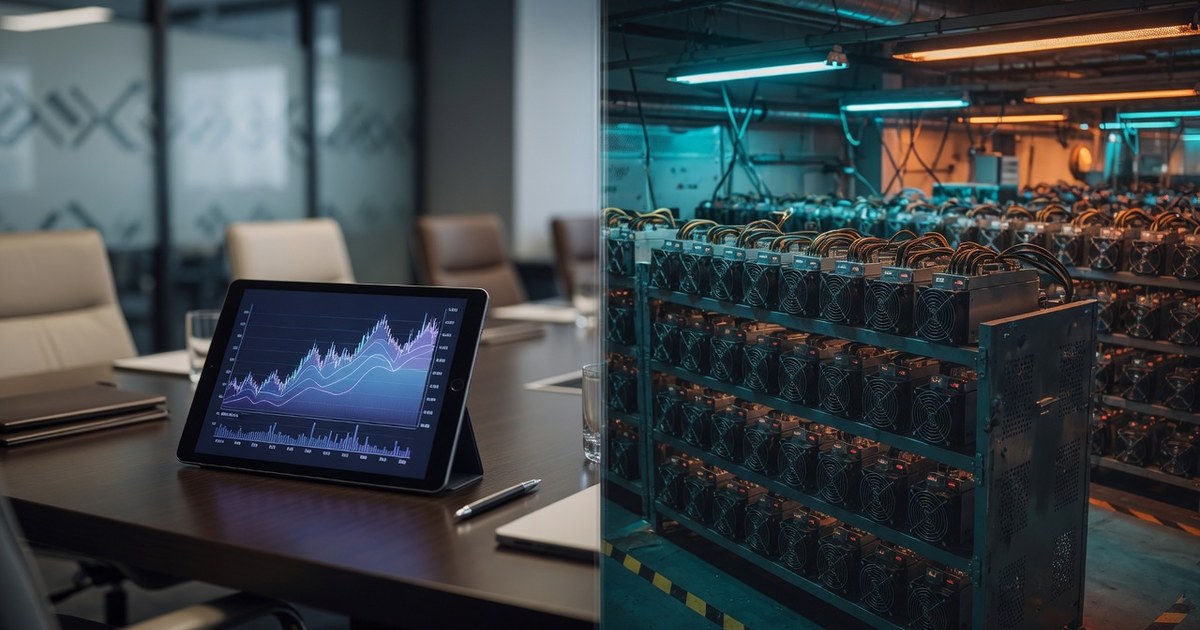
Boards sometimes blur two very different ideas:
- Running miners (an energy + hardware operations business)
- Holding Bitcoin (a treasury reserve / long-term asset decision)
Mixing them creates bad incentives: unprofitable ASICs get justified as “treasury strategy,” and treasury policy gets contaminated by machine depreciation.
This article is for founders, CFOs, and family-business leaders in India who want clarity before either path.
Mining is operations
A mining project looks like a small industrial site:
- Capex on ASICs, electrical work, cooling
- Opex dominated by electricity
- Vendors, SLAs, spare parts, firmware risk
- Physical security and insurance questions
- Accounting for inventory, depreciation, and downtime
Success metrics are operational: uptime, J/TH, ₹ per BTC produced, safety.
Run candidate scenarios on the Bitcoin mining calculator using commercial or industrial power assumptions — not residential defaults.
Treasury is policy
Corporate Bitcoin treasury answers different questions:
- Why hold Bitcoin at all? (reserve asset, long-term optionality, client alignment)
- What allocation is board-approved?
- How is custody designed (keys, multisig, institutional vaults)?
- How do we report, audit, and communicate risk?
- What is our policy if price draws down 50%+?
You can have a sound treasury policy without ever owning a miner.
Decision matrix
| If your goal is… | Prefer |
|---|---|
| Earn BTC by selling energy + computation | Mining operations (if power math works) |
| Hold BTC as a long-term reserve | Buy / accumulate + custody policy |
| “Get Bitcoin cheaper than market” | Prove it with power + capex model first |
| Learn Bitcoin culture for the team | Education workshops — not a container of S21s |
Risks unique to company mining in India
- Power contracts and load — demand charges, outages, and compliance
- Location — heat, monsoon humidity, logistics for hardware
- People — who is on-call when a PDU trips at 2 a.m.?
- Focus — mining can distract a non-energy company from its core business
- Narrative risk — staff or investors may confuse speculative hardware with a treasury plan
A clean governance split
Recommended mental model:
- Treasury committee owns: allocation, custody, reporting, and buy/hold policy.
- Ops / facilities owns: only if you explicitly approve mining as a separate P&L.
- Mined coins, if any, are swept to treasury custody under policy — not left on exchange hot wallets “for convenience.”
- Performance of mining is judged on mining P&L, not on whether BTC’s price went up (price upside belongs to the treasury decision to hold).
How to evaluate a mining proposal
Ask for a one-pager with:
- Miner models, TH/s, watts, quantity
- All-in ₹/kWh and expected uptime
- Capex, shipping, electrical upgrade costs
- Pool and hosting fees
- Sensitivity table (price −30%, hashrate +30%, tariff +2 ₹/kWh)
- Custody path for produced BTC
Then recreate the operating line in the mining calculator. If the sponsor cannot defend the power number, stop.
When companies should skip mining
- No access to competitive power
- No operational owner
- Treasury goal can be met by spot accumulation with clear policy
- Leadership wants Bitcoin education more than a data-center hobby
In those cases, invest in policy, custody, and staff education first. See Corporate Bitcoin adoption services and group workshop inquiry.
Related reading
Work with a Bitcoin treasury consultant
I help Indian businesses separate hype from policy: allocation frameworks, custody design, and education for leadership teams. Schedule a session.
Educational content only. Not legal, tax, accounting, or investment advice. Corporate decisions require qualified local advisors.