
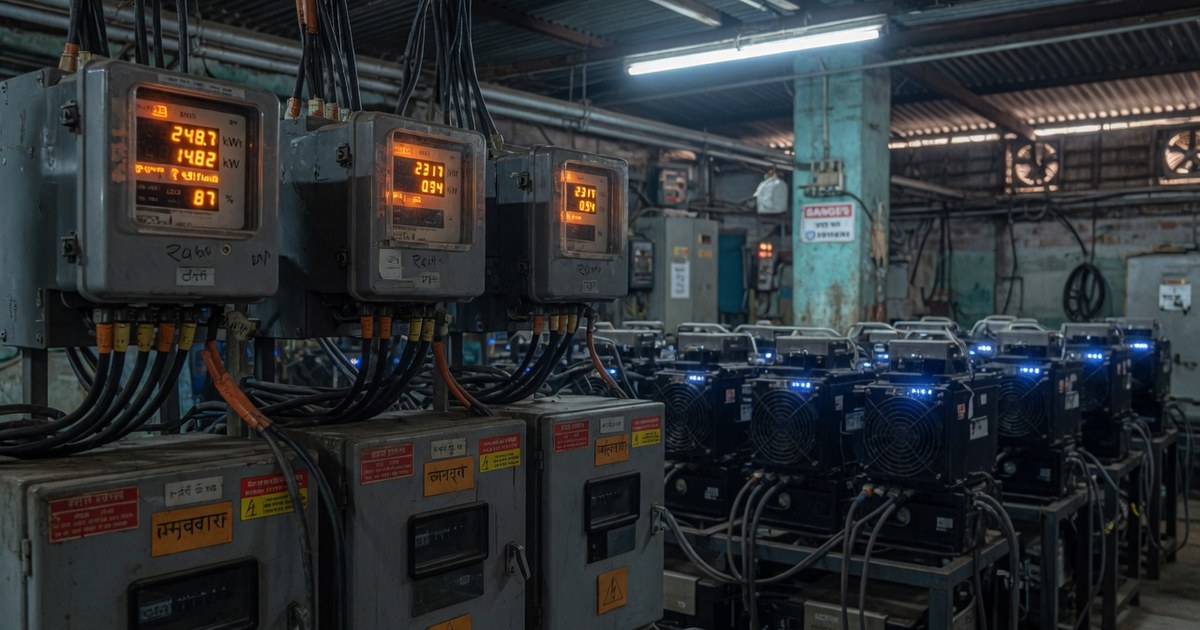
For Bitcoin ASICs, power is the main operating expense. Hashrate ads look exciting; the monthly DISCOM bill is what keeps miners honest.
This guide explains the simple math behind electricity cost and break-even thinking in an India context, then points you to the live mining calculator on P2P Miner Store so you can plug in your own tariff.
The three numbers that matter
- Hashrate (TH/s) — how much work the machine contributes
- Power draw (W) — wall power, not chip fantasy watts
- Electricity price (₹/kWh) — your real all-in rate
Everything else (pool fee, uptime, ambient heat throttling) adjusts those three.
Daily energy formula
Daily kWh = (Power in watts ÷ 1000) × 24 × number of units
Daily power cost (₹) = Daily kWh × your ₹ per kWh
Example: one miner at 3,550 W and ₹8/kWh:
- kWh/day ≈ 3.55 × 24 = 85.2 kWh
- Power cost/day ≈ 85.2 × 8 = ₹682
- Monthly power (×30) ≈ ₹20,450 before any other costs
If revenue in INR is below that power line, you are paying for the privilege of heating a room.
Efficiency: J/TH
Efficiency is often quoted as joules per terahash (J/TH):
J/TH = watts ÷ TH/s
Lower J/TH means less electricity per unit of hashrate. Newer generations tend to improve efficiency — which is why old miners die first when difficulty rises or power is expensive.
What ₹/kWh should you use?
Use the rate you will actually pay, not a marketing spreadsheet:
| Context | What to check |
|---|---|
| Home / residential | Slab rates, fixed charges, time-of-day if any |
| Shop / commercial | Commercial tariff category |
| Industrial / warehouse | Contract demand, energy charges, penalties |
| Hosted mining | Host’s all-in $/kWh or ₹/kWh (often includes margin) |
Illustrative only: many Indian residential users effectively pay high enough rates that home mining is unattractive; some industrial setups with surplus or special arrangements can look very different. Always use your bill.
Also remember:
- ASICs want stable voltage and clean installs
- Heat in Indian summers can force underclocking or failures
- Noise makes residential mining a neighbour problem, not only a math problem
Break-even thinking (simple)
Operating break-even (power only):
Revenue from BTC mined (in ₹) ≥ electricity cost (in ₹)
The calculator on P2P Miner Store shows this as net profit after electricity.
Full project break-even also needs:
- ASIC purchase price (and shipping / duty if imported)
- Networking, PDUs, cooling, racks
- Maintenance, downtime, travel to the site
- Pool fees and eventual hardware resale value
If power-only profit is tiny, full ROI is usually worse.
How difficulty and price move the goalposts
Even with a fixed tariff:
- BTC price up → revenue in INR up (for the same BTC mined)
- Network hashrate up → your share of rewards down
- Difficulty adjustments (~every two weeks) rebalance block times
That is why a machine that “worked” last year can be unprofitable this year at the same ₹/kWh.
Practical workflow
- List candidate miners (or use the dropdown list).
- Note nameplate TH/s and W.
- Enter your ₹/kWh and pool fee in the Bitcoin mining calculator.
- Stress-test: re-run at ₹6, ₹8, ₹10, ₹12 per kWh.
- Ask: does profit survive a 20–30% drop in BTC price or a hashrate jump?
If only the optimistic case works, you do not have a robust plan.
Related reading
- Mining vs buying Bitcoin in India
- Mining for companies: ops vs treasury
- Self-custody for mined Bitcoin
Need a second pair of eyes?
Power tariffs, custody, and “should we even mine?” are strategy questions as much as spreadsheet questions. Book a consultation if you want a calm, India-focused review before you spend on hardware.
Educational content only. Tariffs and regulations vary by state and change over time. Not financial or legal advice.